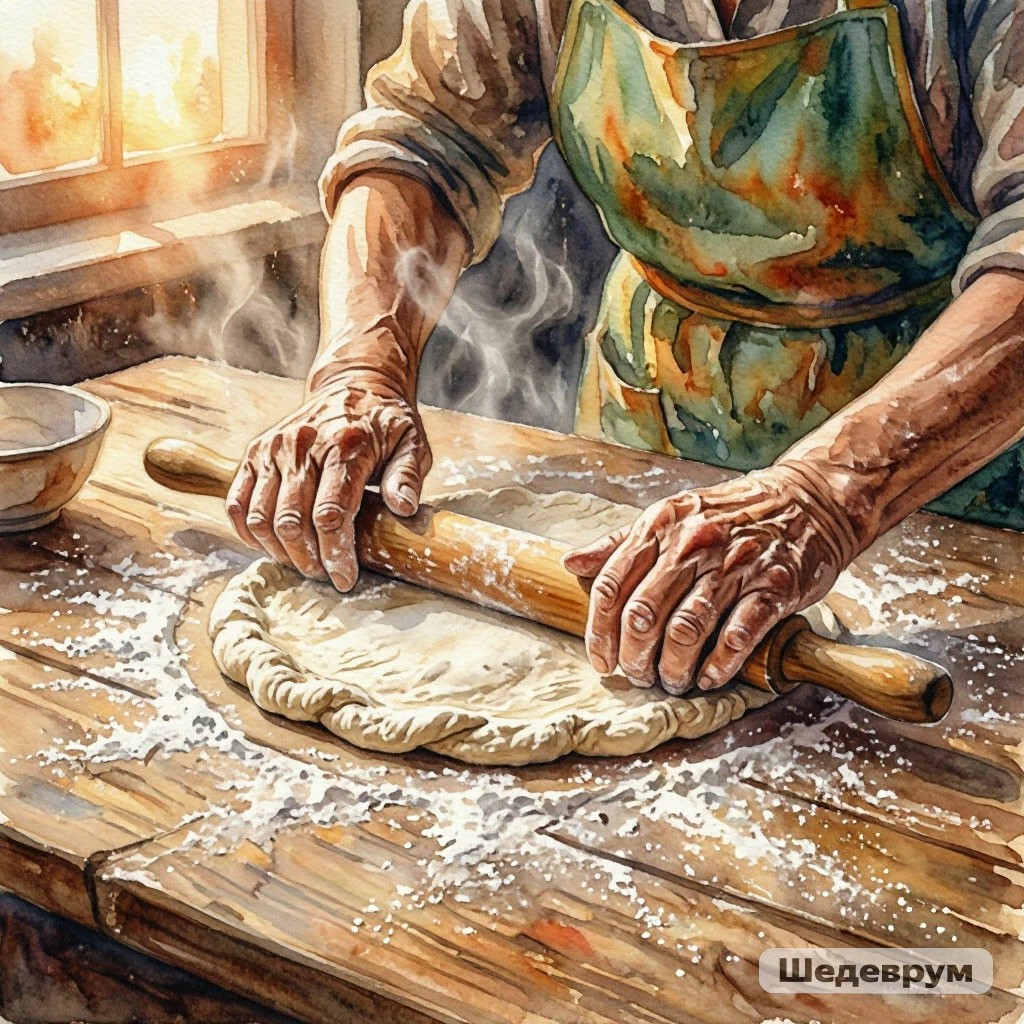
Grandmother’s memories
Vlasov S. A.

Grandmother’s memories
Preface
Beginning in early 2024, I recorded my grandmother, A. S. Boytsova,
on a voice recorder in her room. Sometimes she would begin telling a
story herself; sometimes I would ask a question and she would answer—
jumping from the vegetable garden to the war, from bonds to sparrows,
from a recipe for sauerkraut to the story of how the house burned down
in 1943.
I tried not to switch off the recording. Because I understood that
if I didn’t record it now, nothing would remain. Not her intonation. Not
the way she said, "Oh, Lord," or suddenly fell silent in the middle of a
sentence: "I’ve forgotten what I was talking about."
She was over ninety when these recordings began. She had been born
before the war, grown up without a mother, gone to work at fourteen,
lived through the postwar devastation, a government loan, a barracks room
shared by four people, carbon-monoxide poisoning, the birth of her
Grandmother’s memories
children, and her husband’s death. She had grown a garden. She had fed
and cared for her family. And until her final days, she remembered where
each apple tree had grown in her father’s garden and how the first
steamboat passed along the canal in 1937.
I transcribed the recordings and tidied them up a little: I removed
repetitions, added punctuation, and divided the text into paragraphs. I
had to conceal many names: the book may travel beyond the family, while
she named everyone—both the living and the dead—by name. But if she says
"mazdrosikha," then "mazdrosikha" it remains. If she jumps from a cherry
tree to Khrushchev, then that is how she thinks. Living speech does not
have to be convenient.
There is no continuous plot here. There are fragments: childhood by
the canal; the hungry postwar years; her first wage and the first white
bread she was afraid to squeeze; taking over a piece of land for a
vegetable garden behind the Society for the Blind; a rat killed with a
ski pole; and a relative who sowed rye at midnight so that the jackdaws
would not see him. From these fragments, a life takes shape—not an
official life, not a ceremonial one, but a real one.
I am making this book for those who never knew her. For children
who may never learn what goutweed smells like beneath a scythe, or what
a samovar sounds like when potatoes are boiling in it and sausage is
being warmed. And for myself—so that I will not forget.
Grandmother, this is yours. Thank you for speaking.
Your grandson, Sergey
September 2026
4
Grandmother’s memories
Table of contents
Preface................................................2
Table of contents......................................4
July 24, 2023 – January 31, 2024 Health................7
Saplings...............................................8
Taxi and Stifling Heat.................................8
Weather and Skis.......................................9
Blood pressure.........................................9
Forgetfulness.........................................10
Doctor................................................10
Telephone.............................................10
Cat...................................................10
March 7–8, 2024 Family................................11
Daughter..............................................12
Son...................................................12
Father................................................12
Nicknames.............................................13
Brother...............................................13
10 March 2024 War and Childhood.......................14
Armchair..............................................15
Childhood and Work....................................15
Bread.................................................18
Devastation...........................................18
Housing...............................................20
10 March 2024 Moving and the Garden...................23
Moving................................................24
Unauthorized Garden Plots.............................24
Collective............................................24
Stepmother............................................25
5
Grandmother’s memories
School Principal......................................26
Head Nurse............................................26
20 March 2024 Household...............................28
A Dove................................................29
Figaro................................................29
Fifteen Apple Trees...................................29
Vladimirka............................................30
Bees..................................................30
Zemklunika............................................31
The Neighbor..........................................31
The Toilet............................................32
15 August 2024 The Harvest............................33
Planting..............................................34
Cherry and Currants...................................34
Fertilizer and Ash....................................35
Pitchforks and a Pump.................................36
On Legs...............................................36
I Took Everything Outside and Glued It................36
I Nailed Them Up and Rested...........................37
Where Are the Three Cherry Trees?.....................37
Barberry..............................................37
Plum Trees............................................37
Compote...............................................38
Berries Falling Off...................................38
Strawberries from 1995................................38
Until I Was Full......................................39
The Apple Trees Fell..................................39
The State.............................................39
Pruning the Raspberries...............................40
6
Grandmother’s memories
The Sprayer...........................................40
Larvae................................................40
Mowing and Rats.......................................41
7 October 2024 – 11 September 2025. The Last One......42
A Herd of Cows........................................43
Mushrooms.............................................43
Sowing................................................43
In the Marshes........................................43
A Relative............................................44
The Driver............................................44
Quince................................................44
She Lives Alone.......................................45
Government Bonds......................................45
Sparrows..............................................46
Arranging the Plot....................................46
The Society for the Blind.............................47
7
Grandmother’s memories
July 24, 2023 – January 31, 2024
Health
8
Grandmother’s memories
Saplings
Oh, Lord! While you’re gathering the fruit from these bushes, try
to grow some new ones as well. As I told you: cut off all the curly
shoots, every curly branch, and look at the cut. If the little hole is
black, it’s diseased—burn it. As for the new shoots meant for planting,
bury them until spring. Check them too: if there’s a hole, don’t keep
them. A good cut is clean, without holes—that one can be kept.
Tie them together and bury them, leaving only the tips above the
ground. And don’t stand them upright—lay them down: dig a small trench,
place them in it, and cover them with soil, where the roots are. In
spring, you’ll take them out and cut as many as you need. I didn’t plant
them any longer than that, otherwise they’ll just trail along.
There should be a bud at the top of the cutting, and one at the
bottom too: roots will grow here, and shoots with little buds will grow
there. Later, you’ll dig them up and plant them not straight, but at an
angle: the roots facing south and the tip facing north. Not lying flat,
but half-lying.
Leave space between them. Whether you grow ten bushes, or more or
fewer, is up to you. Water them all summer so that the soil stays wet.
Then, in autumn, take a look: if the little bushes are healthy, transplant
them to their permanent place.
Dig them up and fertilize the soil—I used manure. Dig the hole so
that the soil is loose. Don’t place the roots straight down; spread them
out, then cover them with soil. In spring, you’ll see: if they’ve all
taken root and are growing well, water them. And by autumn, there will
already be some berries.
You have to grow them yourself. How many branches are there in one
bundle? Well, if there are two cuttings per bundle…
24 July 2023, 11:48
Taxi and Stifling Heat
It didn’t come. So I went to the doctor, I suppose, and said that
I couldn’t travel right now. My legs are bad too. I can’t walk on the
ground, let alone through the snow. Anyway, not until spring.
But how am I supposed to get around? By taxi: you get in here, ride
there, and get out. I don’t even know how to call a taxi. And what does
it mean to lock the phone? Where do you press? How do I lock this phone
9
Grandmother’s memories
—akvali…? I don’t even know what it’s called. Well, all right. And then
how do you unlock it? You have to press something somewhere, right? You
have to know everything.
Yesterday I went to bed and fell asleep at about half past eight.
Then I sat up in bed and looked under the door—the light was on. Either
in that room or in yours. It must have been half past eleven already. I
said, "Who’s still awake? Did you lock the front door with the key? No?
Then we’ve been locked in. Did you lock it?" "No?" Why did I say I would
come and feed you? We could have quietly warmed up the food, and you
could have sat down and eaten. I had buckwheat porridge. I put some in a
bowl, poured milk over it, heated it up, and ate it.
Did you close the transom or something? It’s so stuffy. At least
open the door. You don’t close the door at night—how can you breathe in
here?
31 January 2024, 17:33
Weather and Skis
There were frosts, and you went skiing. But now the temperature is
above freezing, the children aren’t going outside, and you’re ill too.
17:39
Blood pressure
Do you wake up? Your blood pressure is high. I take pills for
diabetes, my heart, and my blood pressure. After I take them, it goes
down—but blood pressure that’s too low is bad too. Around eleven o’clock
and around seven in the evening, I start to feel better. During the day,
I’m more or less myself; my blood pressure is closer to normal: 140 to
150. It never goes below 136, and in the evening it rises again.
On Saturday at one o’clock in the afternoon, I listened to a program.
The host, the journalist O. K., has held that position for fifteen years.
She asks professors, neurologists, and general practitioners questions.
This time, they were discussing the intestines.
I can’t listen on Saturday—I have to eat lunch at one because of my
diabetes. But on Sunday evening at eight, I watch the repeat. There was
a program… Good Lord, was it about a stroke? What was it called? I
listened to it, but I just can’t remember the name.
17:44
10
Grandmother’s memories
Forgetfulness
It seems I didn’t lock the door. I used to come from the elevator
and check it. Now I think, "Did I turn off the gas?" I go over, sit down,
and then go back to check again—no, I did turn it off.
In general, you forget everything in the world; the word you need
simply flies out of your head.
17:48
Doctor
He’s from Hospital No. N—who knows where he has worked, probably in
every country. Now he hosts a television program and answers viewers’
questions about health. He was explaining how much honey one may consume:
a tablespoon in the morning and another in the evening, as a preventive
measure.
17:54
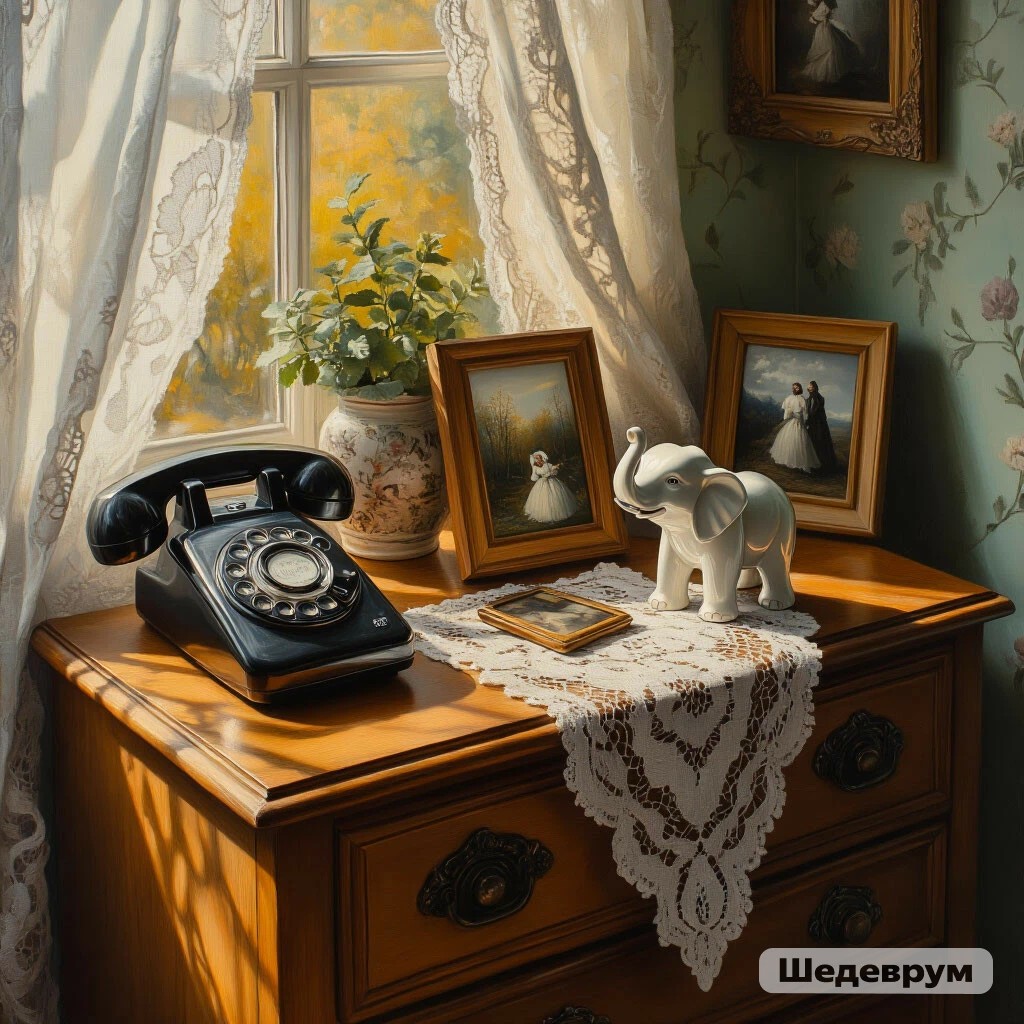
Telephone
He was here last time and left it on the sideboard. He went away,
and I looked—the phone was lying there. I picked it up; it was heavy,
probably half a kilogram.
17:57
Cat
Oh, forget you—go by yourself. I’m not going, and don’t wait for
me. He’s waiting for his dinner—go to him.
17:58

11
Grandmother’s memories
March 7–8, 2024
Family
12
Grandmother’s memories
Daughter
It was winter. We made wooden runners, and I took her to kindergarten
in a little sled. From the factory itself, past the bridge, along S.
Street. No one had walked there yet; the snow was knee-deep. I would wrap
her up, sit her down, and pull her to kindergarten for seven in the
morning, then run to work myself by eight.
There were no cars or buses back then. When we moved here, there
were only three cars in the entire building. Their owners took turns
keeping watch at night so the cars wouldn’t be stolen—people stole things
in those days. But now it’s gone quiet. The courtyard is packed with
cars. I look out the window, and especially shameless people from the
neighboring entrances drive around looking for somewhere to squeeze in.
They park right by the front steps and hurry home. Our people now simply
park beside the sidewalk.
7 March 2024, 12:42
Son
He worked in R. and attended a technical school. I sewed all his
trousers myself—there was absolutely nothing to buy, we didn’t have
enough money, and you couldn’t find the shops anyway. Later, he went and
bought himself a pair of trousers. My husband was working, and I sewed
all his shirts myself too; there was nowhere to buy them. Then cheaper
clothes appeared, while the rich people snapped up the expensive ones—we
couldn’t afford those. There are probably still some of those shirts
lying in the shed.
19:45
Father
Inspectors and accountants would come to our house from the city.
There was no office or board of directors in those days, so they
gathered at our place. My little sister and I would sit and peek at
them. To this day, I can still see the end of a dry-cured smoked
sausage.
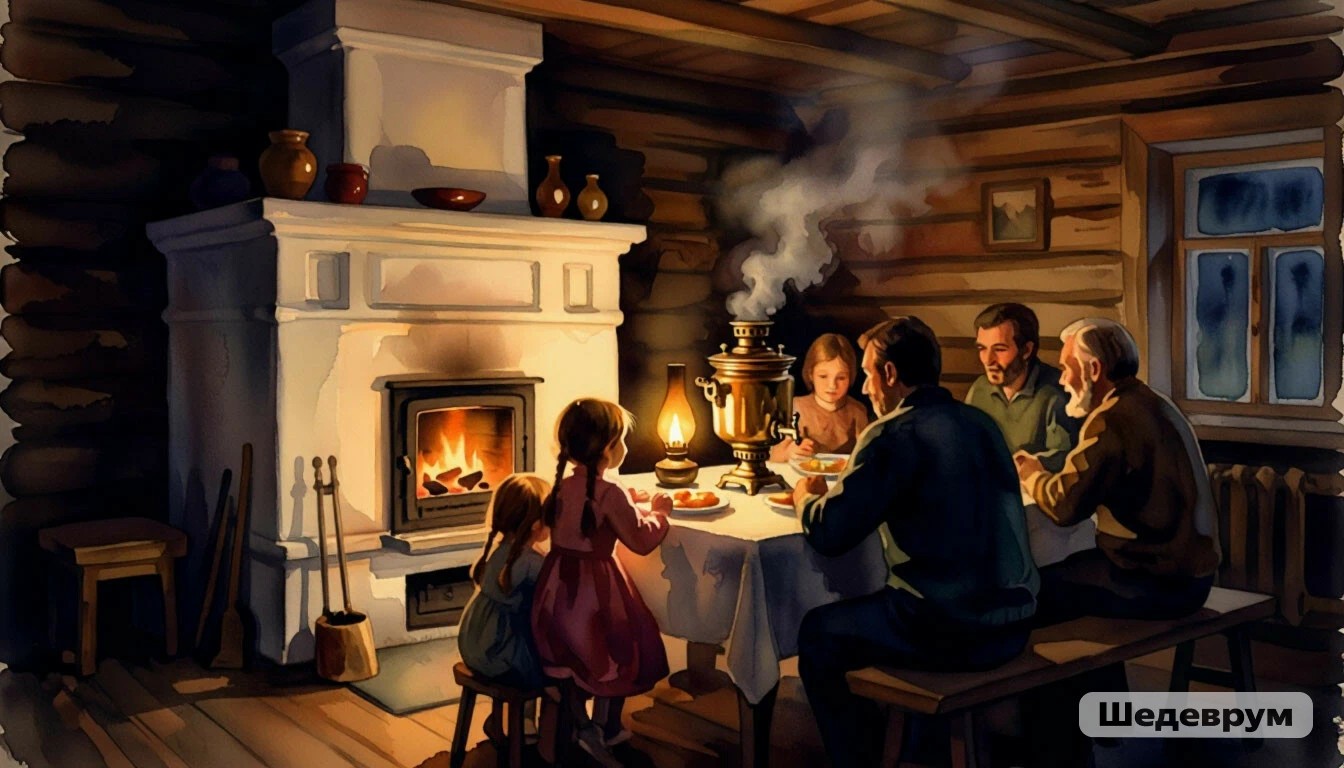
My stepmother and father would set up the samovar and feed the
guests. They put the sausage and washed potatoes right into the samovar
to warm and cook them. If our mother had been there, she would
certainly have cut off a piece for each of us. But our stepmother
13
Grandmother’s memories
didn’t give us any. The guests ate while we sat behind the big stove
and watched.
19:47
Nicknames
They called Aunt K. "Mazdrosikha"—people went to her for work
clothes. I could name every villager. I remember when my cousin was
buried; my brother and I were there. Later, people came from the city.
The village of V., O… They probably studied together and met there.
Don’t write that down; I’m just telling you.
19:50
Brother
He was a hunter. I remember sitting on a little child’s chair and
stirring something in the stove. In the settlement of M., the stoves were
arranged like this: you entered a small hallway, then a room, and between
them was a wall with the firebox; beyond that was the kitchen. When the
gas was turned off, they heated the house with the stove.
His wife called to him from the room, "Where are you in there?"
They had just finished drinking tea and eating pies. She opened the door,
and he fell off the little chair—a cerebral hemorrhage; a blood clot had
ruptured. It happened just when I had been brought back from the city
after surgery.
8 March 2024, 16:31
14
Grandmother’s memories
10 March 2024
War and Childhood
15
Grandmother’s memories
Armchair
Move it closer so I can get some sunlight. That’s why I sat on the
table: once it’s past two o’clock, there’s nowhere for me to go in this
room, and I can’t lie down anymore—the springs make my sides ache. We’ll
have to put a blanket underneath tomorrow.
Turn the armchair so the sun won’t shine in my eyes. That’s it.
Still, move it a little closer.
Well, what can I tell you? I was listening at lunchtime: Ukrainian
prisoners of war don’t want to be exchanged. They want to remain in
captivity, or fight on our side, or build and repair things. Everyone is
fed up with everything.
But back then, we had no time for any of that. The war. Here,
they’re gathered in little groups somehow, but back then there weren’t
any groups. I was lying there thinking…
Did you turn it on?
10 March 2024, 16:20
Childhood and Work
There were no baby carriages. Babies were wrapped in some old piece
of clothing. The war began, and there was neither a father nor a mother.
My mother died young; she wasn’t even thirty. It was a serious illness.
My little sister and I were left on our own.
The canal was dug not with excavators or machines, but with
wheelbarrows. They brought in all the prisoners. I think they started
from Moscow: the first section, then the second, and then the fourth came
closer to us—there was a hospital there. The fifth section was where the
peat was dug; Mordovian women lived there and worked cutting peat. The
sixth section was closer to us, and the seventh was toward Dubna.
In 1937, they filled the canal with water, and the steamships began
to sail. Everyone sat on the bank and watched. Then tugboats went along
the canal, pulling rafts—long ones, tied together. They built a hut on
each raft, where the escort sat, and lit a fire on top of the logs. We
used to run there to watch.
And we were hungry. Before the canal was filled, we gathered hollow-
stemmed plants behind the sheds—they flowered like dill. We looked for
the thicker sorrel behind the sheds. We would collect an armful, sit
down, clean it, and eat. We lived on grass.
16
Grandmother’s memories
Then little black prickly plants began appearing in the fields—
those things you know, the ones that grow in the fields when you travel
to the dacha. We ate those too.
We studied during the winter. Until the fourth grade, the school
was nearby, in the village. But to finish seven grades, you had to walk
to another village—five whole kilometers. We had nothing to wear on our
feet. There were valenki—quilted felt boots, like padded jackets. We had
no galoshes, so we cut pieces out of car inner tubes and glued them
together. We walked in those galoshes over our felt boots because the
road ran through a low-lying area, across marshland, with water
underneath the snow.
Our father was at the front. Hungry, cold, and wading through the
snow near Leningrad, they drove the Germans back. There was nothing to
eat. If they came across a frozen dead horse, they would cut strips from
it and eat the horsemeat.
In 1943, the house burned down, and we had nowhere to go. Our
stepmother took my sister and brother—the children who had been born
after us—to the village, while we remained among the ruins. The women in
the village persuaded my mother’s sister, our aunt, to take us in. We
lived with her and went to school, and in the summer we worked on the
collective farm: watering the crops and weeding with the old women. In
autumn, we gathered fallen ears of grain and earned money for
ourselves.
They would bring potatoes in from the fields. There were five of us
girls, and they assigned us to the oxen. They weren’t huge oxen—just
young ones. But how were we supposed to harness them? You would lie awake
at night thinking, "Tomorrow I have to harness Borya again, and he has
to be handled like a horse."
We harrowed the fields. When a horsefly bit one of the oxen, they
would bolt, the harrows would turn over and go flying into the water.
And we would sit on the bank and cry. What kind of farm workers were we?
But there was no one else to work—only old women and teenagers.
There was a herdsman in our village. When he saw us crying, he would
take a pole and drive the oxen out of the water. We would cry and cry,
then go back to the field.
The war ended. There was devastation, nothing to be had, and
everyone was hungry—but people still had to be fed. Around the village
17
Grandmother’s memories
were collective-farm fields: potatoes, rye, wheat, and buckwheat. We
worked, and they recorded labor-days for us. There was no money at all.
For each labor-day, they weighed out grain to every worker: however much
you had earned, that much was yours.
From 1947 onward, I already had a work record. But I needed to
study, so I had to enrol somewhere. I took my metrika—the document used
at that time instead of a birth certificate—and went to the city. I
desperately wanted to study medicine. I dreamed about it day and night.
I submitted my documents, but I had nowhere to live, nowhere to
eat, and no money. I asked them to give my documents back, but they
absolutely refused. So I was left without my documents—without anything.
I cried and cried, then went to my grandmother.
My grandmother said, Dear, go back. They’re taking milk to the“
dairy plant. Walk quietly behind the cart. Mother will give you and your
sister a piece of bread each for lunch. Wrap them in a little bundle,
and you’ll have something for the journey.”
I walked behind the cart for half the way. Then the driver stopped,
jumped down, and asked, Where are you from? Why, you’re the chairman’s“
daughter!” I told him everything. He said, Climb onto the cart.” He took“
me to the city and explained how to find the knitting factory.
I walked along, reading the sign: Knitting Factory.” I peeped“
through a little window and said, I’m looking for the person in charge“
of recruitment.” A woman asked me, What are you peeping in for, dear?”“
It turned out that she was the person I was looking for. I told her about
my grandmother, and she said, Sit down and have some tea.”“
Later, she finished work, and the driver finished too—he worked at
the factory. They took me in, and I lived with them for about a week.
She arranged for me to attend a factory-training school. The
director accepted me without any trouble. I studied there, and in 1947
they gave me my work record book. They fed us in the canteen. They would
put oatmeal porridge on your plate, but there was nothing in it except
pressed husks. You put it in your mouth, sucked out whatever nourishment
there was, and spat out the rest. They gave us some kind of soup, and
that was good enough.
At first, we lived in a rented room with a collective-farm woman on
K. Street—she’s still alive, even now. Then they gave us a place in a
dormitory: just a bed. Later, beyond the large pond, there was E. Street.
18
Grandmother’s memories
There were four or five barracks standing there. They gave us a little
room for three or four people—just enough space to put in the beds. There
was no firewood, nothing.
Once, we were overcome by fumes. I was very badly poisoned by carbon
monoxide. He lived nearby. They gave him sick leave so that he could look
after us.
We came to our senses a little and quietly walked across the pond
to the hospital. Everyone there was whispering: the whole town already
knew that we had been poisoned. They gave us sick leave, and we stayed
in the room for several days. But we had to eat, so we quietly went to
the canteen. Back at the workshop, everyone was talking about it; nobody
worked that day. Later, when they saw that we were alive, the second
shift came in. The director then gave us…
16:23
Bread
Little by little, things began to improve. Along the river, they
were preparing land for vegetable gardens and digging drainage ditches.
All the adults worked, and we helped them. We planted the birch grove
near the knitting factory. Everything had to be rebuilt.
Everyone who worked received a salary. They would call you in to
see the director and set your pay. There were bonds—the government loan.
We paid them off for an entire year: they gave us our wages and
immediately deducted the loan payment. We received very little.
But gradually, we began to live like proper people again. When I
saw white bread for the first time, it was impossible to put into words.
It was frightening even to look at. You would pick it up and squeeze it,
and it was so soft and airy. You would think, "What a beauty."
16:39
Devastation
This is the house where I first began living. My childhood—with my
little daughter. The house looked fairly broad, with three windows, but
it stood directly on the ground, without a foundation.
My uncle’s father was a Group One invalid; he limped along on one
leg. They lived behind a screen. He was always repairing galoshes, and
the whole place smelled of glue.
19
Grandmother’s memories
My daughter was born in 1951. My eyes began to hurt, and I was
barely functioning at all. There was hardly any maternity leave pay in
those days—just pennies, and even those were deducted. The state had no
money; everything had been destroyed after the war, and everything around
us had burned. They gave us bonds—the government borrowed money from us.
There would be a whole page in the newspaper where you could check whether
your bond had won anything. Many people eventually lost theirs.
Once, Grandfather brought home a jar of rendered cod and put it on
the table. Father was sitting there and said, "You would have been better
off buying a bucket of potatoes." And Grandfather said, "I felt like
having some cod."
But we were hungry! Father started shouting. We packed up and went
to stay in a rented room with our aunt. Her daughter had died, leaving
two children. One of them would come home from school and say, "I’m
hungry." If I had a piece of bread, I would give it to him; sometimes he
would even arrive carrying a little piece himself.
We lived in a room as wide as a bed. A table stood there, nailed
into the corner on three legs. The stove was heated in the other room,
and in ours the wall was only slightly warm—it was bitterly cold. There
was nothing to eat and no electric light, only a kerosene lamp.
In autumn, we bought a sack of potatoes and some onions and put
them in the cellar. That meant we were considered rich.
In the spring, my eyes became very sore, and I had to leave the
factory. But I had to work. A friend said, "Come to the hospital with
me. I work there; it’s nothing difficult." So I went and got a job as an
orderly in the children’s ward. Later, I was transferred to the
infectious-disease ward as a pantry maid, handing out food to the
patients.
My husband was called up for three months of military training. Our
house was being rented out, and the work brigade was given a room on T.
Street. They voted to let my husband have it because he was in a difficult
situation.
It was a three-room apartment. Four people with children lived in
the twenty-square-meter room; we lived in the nine-square-meter room.
There was a tiny kitchen, but no running water, no bathroom, and no
toilet. There was a water pump beneath the window.
20
Grandmother’s memories
In the rented room, we had paid for our meals, but here we only
cooked lunch. The men would come home from work and ask, "Who cooked
today?" That meant everyone was to eat together. My daughter first went
to a nursery, and then to kindergarten. The kindergarten was far away.
First, we would feed the children fresh meat, and then we would all
eat whatever was left. There were three tables in the kitchen. There was
no gas at all.
Then we began digging up and planting potatoes. By then, my son had
been born. I would put the baby down and run to my husband. He had been
admitted to another hospital with jaundice. I would run back; I had
planted radishes, and they needed watering. Then I would return to the
hospital for breakfast: feed the patients, clean up, and go home.
A neighbor from the twenty-square-meter room looked after my son.
He had a heart condition. Sometimes, late at night—around midnight—he
would knock and say, "I need to warm up an ampoule." I used to give him
injections at night.
17:22
Housing
When we were living with my mother-in-law, my daughter fell ill, so
I called a doctor. Two women from the maternity hospital came. Our house
didn’t have a proper floor: Grandfather had laid joists and boards, but
in spring, when you rocked the baby’s crib, water would splash up through
the floor.
When the doctors saw it, they gave me a referral to improve our
housing conditions. We lived on T. Street, probably from 1952 to 1964,
in a nine-square-meter room. There were four of us.
Then I was called in and given an apartment on I. Street, a corner
apartment near a military unit. We helped the builders as part of our
work assignment: two days at the hospital, two days on the construction
site.
Three doctors came to distribute the housing. Somehow, one of them
managed to register her mother with them—even though the woman never
actually lived there—and took a two-room apartment for herself. I was
given a one-room apartment.
21
Grandmother’s memories
The narcologist was indignant: "How can this be? You need a two-
room apartment, and it was given to her." But what could I do? She was a
doctor, and who was I?
We moved to I. Street anyway, but they didn’t remove me from the
housing waiting list. We lived there until 1976, when we moved here.
People envied us then. Other families were given apartments and
three families were moved into each one, but we were given a separate
apartment for our family. At that time, K. Street was being built up. If
it hadn’t been for Khrushchev and his factory for producing prefabricated
concrete panels, there still wouldn’t be enough housing today.
While we were living on I. Street, I often went to the forest. I
would take your mother with me to the settlement to pick bilberries and
lingonberries. We would come back with baskets full of berries.
Once, I went with two old women, and at two o’clock we couldn’t
catch the bus. I shouted, "Hurry up!" but I couldn’t just leave them
behind. The bus drove away. We waited for the four o’clock bus, but it
broke down. We had to sit by the road until evening, until the next one
finally came at around seven or eight.
I went home, barely managing to carry the heavy basket on my
shoulders. I climbed the stairs, and your mother and uncle were standing
by the open door, pressed close together. They said, "Mum, did you think
about us at all?" I remembered those words for the rest of my life.
I told them everything, and they cooked something for me to eat.
After that, I decided I would never do anything like that again.
I also used to go mushroom-picking. In our basement there were
little storage sheds divided into compartments, each about the size of a
shovel. My husband dug a pit there for potatoes and put up shelves. Along
the sides, I placed three barrels that held four buckets each.
In one of them, I salted honey mushrooms: I would bring them home,
wash and boil them, pour them into the barrel, cover it with gauze, and
add dill. We had mushrooms all winter. In the other barrels, I fermented
cabbage and cucumbers.
For the lingonberries, I had one twenty-liter jar and two or three
ten-liter jars with wide mouths. I soaked the lingonberries in them.
Later, I stopped pickling cucumbers in barrels and switched to those
large jars. I eventually brought them here, but they were stolen from
the shed.
22
Grandmother’s memories
That’s how we lived. And when we began moving here, it was the World
Festival of Youth and Students, and Chinese people were visiting. I even
have a photograph in Moscow.
I’ve forgotten what I was talking about.
17:33
23
Grandmother’s memories
10 March 2024
Moving and the Garden
24
Grandmother’s memories
Moving
My daughter and son were sitting there, saying, "Mum, what if we
don’t move there? The festival will end, the government will run out of
money, and they’ll stop building houses in the city. We’ll be stuck in a
one-room apartment."
I cried and cried. And in fact, if we hadn’t agreed to move, we
would have received an apartment in the city. But we went there. We moved
in 1976.
17:43
Unauthorized Garden Plots
As for the garden, this was how we cultivated the land: you sat on
a hummock, cut into it with a hoe, and piled the soil up. The earth there
was good.
Later, everything was officially registered, because technically we
had occupied the land without permission. The factory workers noticed
that gardens could be laid out there, and they took the land away from
everyone.
A tractor driver came up to me and asked, "Where are you going with
that shovel and bucket?"
I said, "I’m going to dig up some bushes."
He told me, "We left yours."
They left that little patch for me alone, while everyone else’s was
taken away. We were allowed to have only garden beds: we couldn’t plant
trees or build sheds.
But the red apple tree I later dug up had grown enormous, covered
in red apples. I was always watching from the window. As soon as I saw
children running toward the gardens, I would go out and stand guard.
Do you know how hard we worked for all this? So take care of the
thing I gave you—your grandmother’s gift.
17:44
Collective
The plot was on the site of former borrow pits, where they used to
dump rubbish from the city. All sorts of things turned up there until
the men had taken away everything useful. Only the farthest little patch
was left.
25
Grandmother’s memories
Why did they leave that particular piece for me? Later, people from
the factory came and said, "We’ll take you into our collective. Write an
application and pay five hundred rubles." That was a lot of money at the
time, but I went, paid it, and they accepted me.
Whenever the issue came up at a meeting, arguments would begin. The
plots were divided into two-sotka lots. The owner of the plot in the very
center, where the meetings are held now, listened for a while, then stood
up and said, "You don’t know how she got this land or how hard she worked
to cultivate it. Thanks to her, another plot appeared—the factory gave
it to someone—and look what a beautiful garden it is now. The plot next
to it appeared thanks to her too."
She defended me so they wouldn’t have to make awkward zigzags when
dividing up the land. After that, they left me alone. And you should have
seen how jealous people were!
17:46
Stepmother
My sister used to take my son everywhere with her. She kept asking
me to give him to her: "Life is so difficult for you. Let me take him;
he can live in the village."
She had a daughter who was born with disabilities. They stayed in
a hospital in Moscow with her, but the child died anyway. Of course, I
refused—no mother would ever give away her child.
But my sister would take him anyway. Blizzard or no blizzard, she
would wrap him in a large shawl and carry him off to the village. That
was how he grew up. She took him with her every weekend, and in summer
she would take him away for a week at a time.
Then our neighbor, Aunt K., said to me, "Don’t leave your son there
for too long. Do you know how they swear at him?"
Later, there was a cow there, too, and my sister would take him
with her to the settlement. But then he found out that my sister wasn’t
my real sister, and that her parents weren’t his real grandmother and
grandfather.
We were the children of the mother who had died, while their father
had the other children with his second wife. After that, my son stopped
going there. Well, he still visited, but he no longer stayed overnight.
17:50
26
Grandmother’s memories
School Principal
The school principal came up to me and said, "Come with me to the
village after lessons. We’ll buy you a pair of felt boots."
I replied, "Oh, I don’t have any money. I’ll manage in my padded
boots."
But she said, "Come on. The school will pay."
They bought me the felt boots. My father found a coat somewhere,
and my aunt gave me a knitted shawl. I have a photograph of myself wearing
that outfit.
Once, I was walking through the cemetery and saw her husband
kneeling there, looking sad as he tended a grave.
At the hospital, I knew all the doctors. My son’s teeth hurt
terribly, and he was growing very tall. The dentist taught surgery at
the nursing school. At that time, it was in a long, low building right
where the shop is now, in front of the maternity hospital.
I would run in to him and say, "Are you leaving? My son’s tooth is
hurting again!"
And he would say, "I’m about to teach a class. Whisper it to me.
I’ll give the students an assignment and examine him quickly."
I also used to take my son or daughter to the ENT doctor. The
head nurse was always prescribing vitamin C in ampoules. The doctor
would take a syringe with a bent cannula and inject it directly into
the tonsils.
17:53
Head Nurse
A new head nurse was transferred to our hospital. One day she came
in and asked, "What’s that you have there?"
"How should I know?" I replied.
"It’s a lipoma. Don’t let anyone operate on it. We’ll inject it
with penicillin, and it will go away."
No one else was willing to treat it that way, but she gave me only
three injections, and before I even noticed, the lipoma had disappeared.
There are different ways to treat things!
We had a doctor who was very thin. At the slightest problem, he
would immediately say, "Remove it!" Cutting was the only thing he knew.
27
Grandmother’s memories
You should tell your mother about her knee: she should wait before
having surgery and try treatment first. Is it any better now?
17:58
28
Grandmother’s memories
20 March 2024
Household
29
Grandmother’s memories
A Dove
A dove flew in. It looked as if it had been badly beaten—perhaps by
children, perhaps by other pigeons. I tapped on the window, but it didn’t
pay any attention. It came right up to the glass and sat in the corner.
Recently, while I had gone to get some water, it was already gone. It
had flown away.
20 March 2024, 17:00
Figaro
Old age is taking its toll, and my strength is leaving me. When I
get up in the morning, I feel that there is even less of it. I get up
holding on to the bed, then move the armchair and the chair closer—
anything, as long as there’s something to hold on to.
When I take the tablets for dizziness, I just stand there without
knowing what to grab, even though everything is right beside me. I never
thought it would be like this. I used to be running everywhere all the
time—to work, to the village, and here. Your parents nicknamed me Figaro:
here and there, here and there. Now you have to keep running around
too.
My strength is fading, so don’t let your mother do too much work
bent over.
I was listening to a program, and a television presenter was
speaking. They had sent her to a technical school, but she went to an
agricultural college instead. She worked as an agronomist, while studying
by correspondence and completing the technical school in two years
instead of five. Then she went on to university and graduate school.
Now she is already a grandmother, with great-granddaughters. She
says, "For me, the dacha is a form of relaxation." She grows tomatoes
weighing half a kilogram in her greenhouses. She takes a watering can,
her great-granddaughters take their little watering cans, and they follow
her like goslings.
17:01
Fifteen Apple Trees
In the village, everything was close at hand: the cellar, a bench,
and water from the pump. You would wet a sheet of plastic, rinse the
cabbage, and immediately chop it with carrots.
30
Grandmother’s memories
Relatives would come and take vegetables, especially one of my
uncles. I planted extra potatoes, even though we had enough here too,
but I always gave them away to someone.
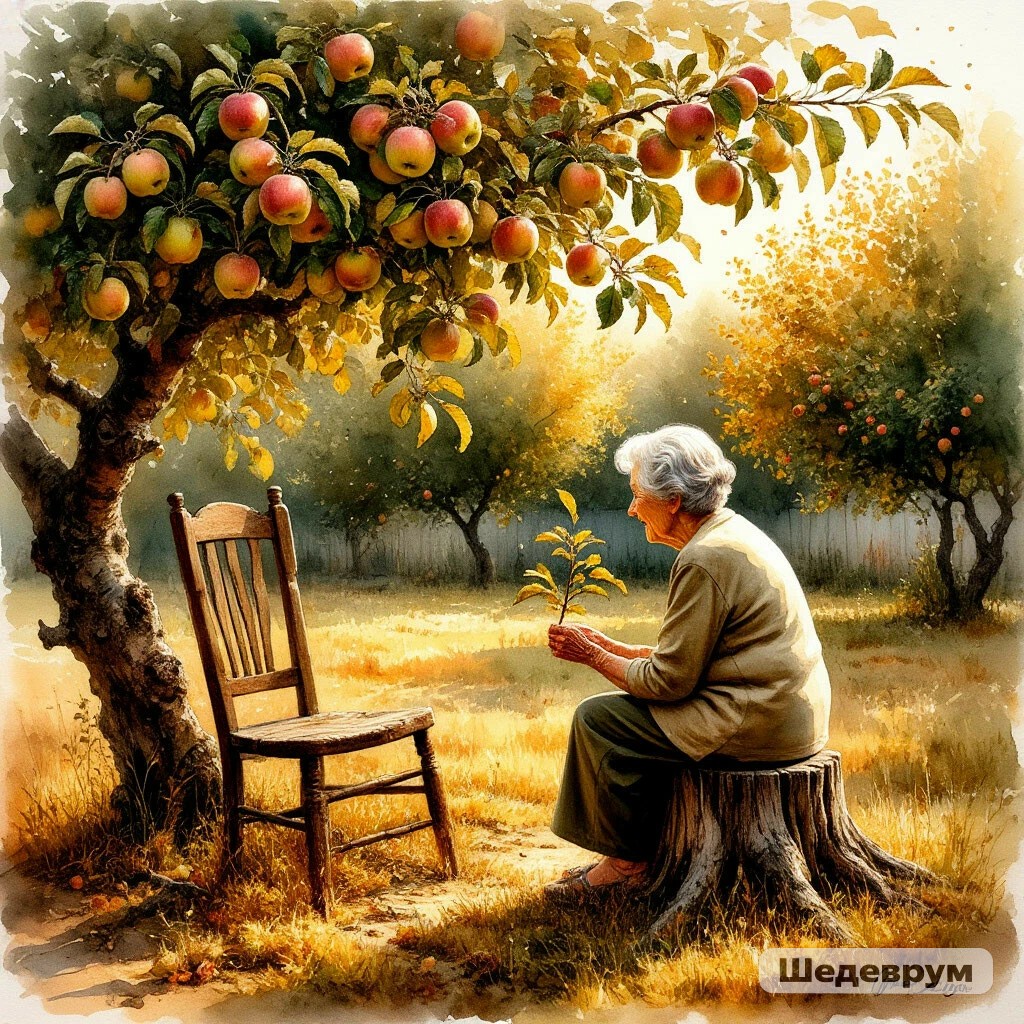
And there were so many apples! Your great-grandfather had fifteen
apple trees. I can still remember where each one grew. Beneath the window
were Anis and Bely Naliv apples. The trees were enormous, like mighty
heroes.
There was one apple tree that bore fruit for only two weeks. At
first, the apples were slightly bitter, but then they became so delicious
you couldn’t get enough of them. But after two weeks, they turned pithy
and lost all their juice. They eventually uprooted that tree.
17:06
Vladimirka
Your great-grandfather planted all sorts of things: apple trees,
pear trees, and red Chinese crabapples. There was one kind of hybrid
apple tree—not Bely Naliv and not Antonovka, but very tasty.
There were also cherry trees. We had more cherries than anyone else
on the edge of the village, so all the sparrows and thrushes would flock
to us. We had to keep chasing them away. You could hear us shouting, "Oh
no, the cherries are ripe again!"
And the Vladimirka cherries were very sweet.
17:08
Bees
When I walked to the village, I would count the houses. Five houses
before reaching ours, the road turned. I would look up and see Mukhtar
already standing there. If I called out, he would whine softly. They had
removed two fence pickets so he could come out onto the street.
When you opened the gate, there was a birch tree, and beneath it
grew birch boletes. Tall linden trees, birches, and a small oak grew
there too.
The moment you stepped outside the gate, there were bees everywhere.
There had been beehives, but my stepmother hardly gave me any honey.
Grandfather sent some occasionally, but only a little.
Later, our neighbor—may he rest in peace—started an apiary. The
bees didn’t have far to fly; they hummed right by the gate. It was
31
Grandmother’s memories
especially loud when the linden trees were in bloom—the buzzing made an
incredible noise.
17:10
Zemklunika
We used to have strawberries, but they were all ruined, so I planted
zemklunika—a hybrid of garden strawberries and wild strawberries. The
bed was small, stretching from the wall to the window, but it was wide.
The plants grew large and produced no runners.
I should tell my grandson to get the basket out of the garage; it’s
probably still there. Once, I came over and picked a whole basketful—
about three liters.
When I reached the bus stop, a woman was sitting there and said, "I
can’t get enough of the smell." We got into a boat, and a man there said,
"The chairman’s daughter! He was quite a man."
He had worked as a chairman all his life: first, when he was young,
he was a shop assistant, and after the war he became chairman. Later,
the collective farms of O. and P. were merged into a state farm.
They sowed buckwheat, oats, wheat, rye, peas, and vetch. They sowed
oats together with peas so that the peas could climb up the oats instead
of lying on the ground.
Sometimes you would quietly sneak in, gather some peas, and boil
them. As soon as you crossed the river by boat, the air seemed completely
different. You changed into rubber boots, put on sweatpants, and went
out into the fields, where the corn grew incredibly tall.
17:14
The Neighbor
When this garden plot was first created, there were no garden beds
where the quince tree stands now—just a strip of bare earth. From here
all the way to the refrigerator, there was a bed of strawberries.
Once, I hadn’t gone there for about three days. When I came back,
it was a sea of red! There were still unripe berries and blossoms too.
It was unbelievably beautiful.
I called to the neighbor who lived where the metal shed stands now:
"Come here and look at this beauty!" He came over and stood there, unable
to take his eyes off it. He said, "It’s a shame to pick them."
32
Grandmother’s memories
That time, I filled half of my seven-liter plastic bucket.
And what wonderful potatoes grew here—Sineglazka! They were
perfectly clean; you pulled up the plant, and the potatoes simply came
popping out.
But now you need fertilizer—manure. In the past, my son would
arrange it with a friend of his, a livestock keeper at the state farm.
The man kept records of how much manure each person took away and issued
an order for a truck.
Your father happened to work for a transport company, so he had
access to a dump truck. He brought us as much manure as we wanted.
Everything grew beautifully, and the soil remained fertile for a long
time—but eventually it became depleted.
17:18
The Toilet
Our outdoor toilet was open on one side so that it could be emptied.
There was always a pile of peat and a broken shovel beside it. After
using the toilet, everyone would throw a shovelful of peat over it. It
made excellent fertilizer.
Later, there were no more cows in the village, so my father came up
with a way to fertilize the apple trees. He would measure two meters from
the trunk and dig a circular trench about thirty centimeters wide.
Then he would take a large bucket—or a jar with a wooden handle—
scoop out the contents of the toilet, pour them into the trench, rinse
them down with water, and cover everything with soil.
17:23

33
Grandmother’s memories
15 August 2024
The Harvest
34
Grandmother’s memories
Planting
Seedlings should be planted at an angle, with the roots pointing
south. In winter, tie the cuttings into a bundle and bury them shallowly,
making sure the roots are in the soil.
In spring, take them out and plant them at an angle facing south.
Then water them generously, keeping the soil moist at all times. If they
grow strong by autumn, they can be transplanted to their permanent
location. But I think it is better to leave them for another year, so
that the bushes become bushier and develop a good root system.
Those were exactly the kinds of seedlings I later gave to your
father. To transplant them, dig a deep, wide hole, add fertilizer, and
loosen the soil. Plant them so that there are buds above the ground and
at the top.
At that time, I grew thirteen blackcurrant seedlings. I gave two
away to be planted at your home, and planted the other eleven bushes
along the path. By now, they have probably grown so much that they form
one solid wall.
Of course, they could be renewed, but I wanted them to grow in the
sunshine.
15 August 2024, 11:09
Cherry and Currants
Did you ever cut down the old, large cherry tree? If you did, you
must remove the stump and plant a new tree in its place.
And what about the little cherry tree I was growing near the
greenhouse? Did it grow? I asked you to water it. It should be sweet and
healthy. Where did you put it? There was both a felt cherry and an
ordinary cherry tree there. Is the ordinary one still small? How can it
still be small? It should already be big! I started growing it from a
tiny shoot. I cut away everything around it but left that one opposite
the currants.
By the way, the curly currants—there are four bushes—should all be
cut back. If no new shoots have grown upward from the stump, leave a few
fresh ones and cut the rest right down to the roots.
Be sure to look at the cut surface: if there is a black hole in the
middle, the bush is diseased. It must be uprooted and burned.
11:12
35
Grandmother’s memories
Fertilizer and Ash
I bought apple and pear seedlings from vendors from the T. Academy,
who stood near the seed shop. You shouldn’t buy them in summer; I planted
them in September. For seedlings, you need to dig a large, deep hole and
fertilize it well.
I made compost by putting rotted grass on one side of the pile and
fresh grass on the other. I covered it, and it began to decompose and
heat up. I collected not only weeds but also mown grass. Sometimes a
neighbor would say, "I mowed some grass for you over there. Bring your
wheelbarrow and come get it."
For the potatoes, I collected leaves. Where the forest has grown
outside town now, there used to be no forest, but there were plenty of
leaves. In autumn, I filled sacks, hauled them over the fence, and spread
them over the potato plot.
In spring, I didn’t dig the soil over. I simply raked up the leaves,
made a furrow, and planted the potatoes. The soil in the beds was always
well fertilized.
Nowadays, you don’t make dividing strips between the beds, but I
had everything arranged in beds and strips. I put grass and leaves in
the strips. Every year, I switched the beds and the strips around so that
the soil could rest and be fertilized continuously.
I burned so much wood ash! Do you remember the wide aluminum tub?
I would fill the whole tub with ash, store it under the table, and cover
it. In spring, I used the ash to feed all the bushes, especially the
currants and the Bogatyr apple tree.
For the garlic, I made four furrows with a special small red trowel.
It wasn’t a hoe—it was meant specifically for digging out weed roots. I
made the furrows, sprinkled them with ash, laid out the garlic cloves,
and covered them with soil. You don’t need to push them into the ground;
just lay them down.
I planted onions the same way, making sure the bottoms weren’t
pressed down.
11:16
36
Grandmother’s memories
Pitchforks and a Pump
Your uncle bought a special digging fork with four tines. Once, he
decided to straighten one of the tines, but it broke off. He had to buy
new forks, shovels, and handles, but he never repaired anything after
all.
In the little shed between the house and the toilet, there is still
a heavy military pump that he brought home. It was a good pump, but it
was broken—it was missing some kind of ring, and your uncle never got
around to buying one. It should have been taken to the scrap-metal
collection point; it’s still operating just across from the garden
plots.
11:23
On Legs
A frame with legs is hanging from a nail; it’s a part from a cabinet.
Don’t break it up or burn it. It might be useful to someone who wants to
put the cabinet on legs—it’s currently sitting on top of the wardrobe
without its bottom section.
The clothes hanging where the garbage is collected should probably
be thrown away to clear some space. There are many things hanging there,
including a good gray coat that your mother wore when she worked in cold
weather or simply threw on over her clothes.
11:25
I Took Everything Outside and Glued It
I used to take everything outside and wash it. I had a clothesline
stretched from the summer apple tree to the plum tree opposite the door
of the little house. I hung laundry and sofa cushions there to dry.
I would take the sofa out in sections, clean everything, and glue
it so it would stay tidy. And I carried so many boards! When they were
building the road, I dragged thick boards from there, one at a time.
There was a whole pile of them.
I kept them so I could replace the floor in the little house,
because the floor had collapsed near the wardrobe where the sofa stood.
My grandson and I put bricks underneath it, but he never got around to
installing a new floor. Then I noticed that my boards were already lying
in the greenhouse, but I kept quiet.
11:26
37
Grandmother’s memories
I Nailed Them Up and Rested
Under the shelter, there were metal strips with nails hammered into
them. People used to make things like that, but they don’t anymore. I
nailed them over all the corners.
That was where I usually rested after hanging up and drying all the
sofa cushions. The cushions themselves have probably rotted away by
now.
11:28
Where Are the Three Cherry Trees?
What happened to the three cherry trees? Along the neighbor’s fence,
I planted young gooseberry and currant bushes, all the way up to the
large redcurrant bush. Surely they haven’t thrown it away yet?
It was a huge bush and always produced lots of berries. I planted
two bushes then: one there, and the other large one behind the house,
between the toilet and the neighbor’s garden. But that area has probably
become overgrown with plum trees by now.
11:33
Barberry
There used to be a huge, thorny barberry bush, but I eventually dug
it up. Long, sour berries hung from the branches in clusters—it was such
a beautiful sight! The bush reached all the way to the summer apple tree,
and daffodils bloomed beneath it. Now there’s nothing there.
11:34
Plum Trees
There used to be seven plum trees, and they produced an enormous
number of plums. They formed a boundary all the way to the summer apple
tree.
Eventually, only one shoot remained, and the new neighbors cut it
down when they were putting up fence posts. Sometimes there were so many
plums that I would say, "Pick the ones hanging over on your side." They
would eat them, and I wasn’t stingy.
11:35
38
Grandmother’s memories
Compote
Once, I made about five three-liter jars of compote. It was
delicious and went down so easily! But then I was struck by terrible
diarrhea. I couldn’t get off the bucket—I had been poisoned.
Your mother asked, "What should we do with the compote now?"
I replied, "Open the jars and pour it into the toilet."
We had to throw away the entire supply. It turns out you mustn’t
make compote from felt cherries. You can eat ordinary cherries without
any problem, but it’s still better to remove the pits.
11:38
Berries Falling Off
The berries often fell off, and many small shoots—suckers—grew
beneath the bushes. I dug up these shoots and planted them in a bed. Once
they had grown, I transplanted them again. Later, the old bushes were
cut down.
11:39
Strawberries from 1995
In 1995, I had a strawberry bed stretching from here all the way to
the refrigerator. The soil was clean, without any rubbish. Once, I was
away for about three days. When I came back, the whole bed was covered
with berries!
The plants were tall and produced no runners. Some of the berries
were white, while others were red and ripe. I almost felt sorry about
picking them. I called the neighbor over and said, "Look how large and
sweet they are!"
I filled a seven-liter red bucket to the brim. My son was already
married by then. I told my daughter-in-law, "Pick some." She filled half
a bucket and then complained to the other women, "She must have picked
berries from the whole plot for there to be so many."
But it was all from just one bed!
Later, the strawberries began to die out, so I planted zemklunika—
a hybrid of garden strawberries and wild strawberries. When they banned
people from keeping garden plots, I dug up the plants and transplanted
them to the village. That was around 1994 or 1995.
11:40
39
Grandmother’s memories
Until I Was Full
I ate my fill of those berries back then. Then I went to the crossing
and got into my uncle’s boat. One woman said, "Oh, she’s the chairman’s
daughter, the one from the garden!"
I offered them some berries: "Please, take some."
But they refused. "No, we’d feel bad eating your berries. Take them
home."
There’s nothing left on that plot now. As soon as my aunt sold the
house, I stopped going there.
Here, my son and I planted a row of plum trees—either seven or nine
of them. Now they have become very old.
11:44
The Apple Trees Fell
Your great-grandfather had fifteen apple trees. I remember every
one of them: one Streyfling, another Streyfling, Papirovka, Cinnamon,
three Antonovkas, one hybrid, a striped variety, Grushovka, Kitayka, Bely
Naliv, and Anis.
The Anis apples were small, and when you bit into one, the flesh
felt almost soapy.
Our house stood at the edge of the village, so all the wind blew
straight toward it. Then the storms began. The neighbor would call and
say, "Another one of your apple trees has fallen!"
They fell one after another, as if someone were dropping them from
above.
I didn’t like the Bely Naliv apples. As soon as they ripened, you
had to eat them immediately; otherwise, they became soft and pithy. But
my father’s Antonovka apples were excellent. My parents even took them
to the settlement to sell.
11:45
The State
In the past, there were compulsory state deliveries. We had to give
the state, free of charge, either 220 liters of milk—I’m not sure of the
exact amount—and also several dozen eggs.
40
Grandmother’s memories
If you kept a pig, after slaughtering and singeing the carcass, you
were required to hand over the hide. They collected a lot of wool from
sheep. The state took everything.
11:48
Pruning the Raspberries
You said there aren’t many raspberries because they were pruned
incorrectly last year. Gnarled shoots and branches with swollen knots
should be cut right down to the roots, without leaving stumps, because
pests breed in them.
Leave the fresh shoots so there will be more berries next year. Cut
out the old branches that produced fruit this year. Cut off the tips only
of crooked shoots that won’t bear berries. Any small growth around the
bush should also be removed.
11:51
The Sprayer
They’ve probably thrown away the sprayer by now. If you don’t use
it for a long time, the piston dries out. I used to keep it at home under
the wardrobe.
When using it, you lower one end of the hose into a bucket and hold
it in place with your hand. To stop it from popping out, I tied a small
weight to it. If the hose came out and sucked in air, you would pump and
pump for nothing, and afterward it wouldn’t draw up any water.
Then you had to go to the barrel, lower the hose into it, pump up
the water, and continue spraying.
11:53
Larvae
Did you paint over the cuts on the pear tree? Check whether the
paint has cracked. If there are cracks, paint over them again; otherwise,
pests will get inside.
Once, I went up to the blackthorn and saw a few dry, curled leaves
left on it. I took one off and unfolded it—and there was a whole mass of
larvae inside!
I went to the neighbor and said, "Look, even though there have been
frosts and snow, so many pests are wintering in those curled leaves."
41
Grandmother’s memories
I removed three or four leaves, and there were clusters of larvae
in every one. You should check the currants in the same way.
11:55
Mowing and Rats
Are the scythes still standing in the toilet? Where did you put
them? There was one small scythe that a neighbor gave me, while the
village ones were long.
Sometimes I would get up early, while the dew was still on the
grass, and mow goutweed between the currant bushes and apple trees. Once
everything was mowed, it looked so clean! Then I would stand on the
porch, admire it, have some tea, and lie down on the sofa.
In the evening, I rested on a small sofa on the terrace. A working
refrigerator stood at my feet. I kept it empty and brought food only for
one meal.
But then a rat got inside. It probably came over from the neighbor’s
place—he kept chickens, so there was food everywhere and plenty of
rats.
One time I opened the refrigerator, and it was sitting there looking
at me. The doors to the house and outside were open, and it ran behind
the refrigerator and behind the ottoman. There were ski poles standing
in the corner, so I used one of them to pin it down.
7 October 2024, 16:03
42
Grandmother’s memories
7 October 2024 – 11 September 2025.
The Last One
43
Grandmother’s memories
A Herd of Cows
One day, I went outside the garden, and there was an incredible
noise—a herd of cows was running past, their hooves clattering! There
was always a lead cow in the herd, the one that set the direction.
Wherever she ran, all the others followed.
I grabbed a bucket and began banging on it loudly to drive them
away from the potato plots. Then the herdsman came running. The women
shouted at him, "What were you thinking, letting all the cows loose?"
He replied, "I’m driving them away just like you are! Look, the
lead cow has turned toward the forest, and the whole herd is following
her."
It turned out that the herdsmen had been drinking, fallen asleep,
and let the herd get away.
16:06
Mushrooms
Sometimes you would step outside the gate and cross the road. There
used to be a pond there, but later the water disappeared, leaving a
hollow overgrown with short grass.
You would walk along the bank, gather some russulas and birch
boletes, peel a couple of potatoes—and the soup would be ready.
16:10
Sowing
After sowing, they rolled the soil with enormous rollers so it
wouldn’t remain loose; otherwise, the jackdaws would peck up all the
seeds. They did the same with corn.
Once, they sowed a huge field of cabbage across the road. I looked
out the window and saw rows of cabbage heads, but they didn’t even harvest
them for the livestock. Everything was left there until it disappeared
under the snow.
16:11
In the Marshes
The town stands on marshland. There used to be boggy places and
overgrown hollows everywhere.
Sometimes my grandmother—may she rest in peace—would say, "Girls,
why don’t you go and gather some mushrooms?"
44
Grandmother’s memories
We would climb down into one of those hollows and look along the
slopes—and there they were: red-capped boletes. Their caps were bright
red and beautiful, and their stems were rough.
We would fill an entire basket, and then Grandmother would make
soup.
16:17
A Relative
Half of the house is divided into rooms by partitions. I told you:
if anything happens, call him.
He turned his half of the house into a garage. You drive the car
in, open the door, and there’s a section for jars. On either side are
wooden panels that slide aside, with potatoes stored behind them.
To fertilize the soil, he sows rye every year. He prepares all the
land, but only goes out to sow at night—at midnight. He does it in the
dark so the jackdaws won’t see and eat the seeds, because birds sleep at
night.
16:19
The Driver
There were three drivers working in the settlement. After work,
they often drank. He was a short man.
Sometimes a car would be driving along the road, but you couldn’t
see the driver. His son was driving while his father slept behind the
wheel.
When it was time to prepare for exams, he would hide on the flat
roof of the outbuildings in the yard. He would spread something out, lie
there, and study.
His uncle would walk around looking for him, but he never knew
where his nephew was hiding.
16:22
Quince
"Quince? Its flowers were large—simply beautiful! I was planning to
transplant it to a new place, but after my son passed away, I had to tend
the garden alone, and I didn’t have enough strength.
I didn’t wait until autumn to dig over the beds. I harvested the
garlic and immediately cleared the soil, made a furrow, put leaves, plant
45
Grandmother’s memories
tops, and weeds into it, widened the path between the beds, and dug it
over again. As soon as I finished, the ground would become overgrown
again, and this took the whole summer.
But the plot from the pear tree to the raspberries was always loose
and well cultivated. I planted leeks there. I sowed them sparsely so the
seedlings would grow thick.
All of that is gone now… And what is left?"
10 October 2024, 14:58
She Lives Alone
"She lives alone in a three-room apartment. By the time she takes
her pills and cooks herself some porridge…
She sleeps on her side. Today, she’ll have dinner at six in the
evening because she gets up at six in the morning to take her pills.
I seem to get up at seven, but in fact I just lie in bed from six.
I look over and think, "Ah, she’s up, and then I stay in bed until
seven."
12 October 2024, 18:22
Government Bonds
It is hard to remember—not only for me, but for everyone of my
generation. These memories already take my breath away.
One by one, we were called from the workshop to the director’s
office. Next to each person’s name on the list was the amount of their
monthly salary. They forced us to "subscribe" to bonds worth a whole
month’s pay, and then deducted the money from our wages over the course
of several months.
The country had been devastated. We had to rebuild the economy,
restore the factories and the machinery. And we did our part. In return,
they gave us government bonds. They promised that we would win prizes.
What prizes? Some people angrily tore up the papers; others threw
them away. They lay scattered in the streets. The clever ones collected
them. Later, newspapers published the results of the drawings. A few
people won large sums of money, but most were left with nothing.
That is how we came by all of it. And now only the memories
remain.
8 April 2025, 16:01
46
Grandmother’s memories
Sparrows
Sparrows live in flocks. There are hardly any left in Moscow—larger
birds hunt them, and municipal workers mow down all the grass. Sparrows
feed on seeds. If the grass were left unmown, it would flower and produce
seeds, but now they have to peck at hogweed instead.
So, in the city, they have little to eat and nowhere to hide. They
have moved to the outskirts and to the villages.
And how can you tell a female sparrow? Her head is brownish, and
she is smaller overall.
7 August 2025, 11:47
Arranging the Plot
I had already planted some currant bushes. One day, I was walking
along with a bucket and a small shovel when the tractor driver told me,
"The men from our building have already divided up your plot and quietly
started cultivating it."
It turned out that your grandfather had let the secret slip at work
after drinking—he had told them about the unused land. Seven men quickly
claimed the area where cows used to rest and boys used to play in the
trenches.
When we arrived, the whole place had already been dug over. No one
had touched our section because it had trees, a trench, piles of broken
dishes from the dairy plant, and pieces of bitumen.
I said to my husband, "Look what your loose talk has led to! We’ll
have to take this trench, and leave the trees as the boundary."
When my son returned from the army, we cut down the trees, filled
in the trench, and slowly began cultivating the land. We planted potatoes
at the back because, at first, that was all we had the strength for.
Later, the tractor driver told us that the factory director had
seen how difficult our plot was, felt sorry for us, and let us keep it.
Then, when everyone was given three hundred square meters, some
people approached me and offered me a place in the excavator factory’s
gardening cooperative. But I had to pay a large membership fee—five
hundred rubles. I went home to get the money, paid it, and they accepted
me.
At a meeting, someone began complaining that I had too much land,
but they defended me:
47
Grandmother’s memories
"We accepted her into our cooperative. Besides, we took the
neighboring cultivated plot away from a teacher and gave it to someone
from the boiler house, so our cooperative only benefited."
After that, they left me alone.
Oh, how many times I had to go to different offices to register
that land! I got up at four in the morning to stand in line at the
administration office. But in the end, I completed all the paperwork,
and we began planting.
11 September 2025, 09:25
The Society for the Blind
We planted currant bushes in the plots behind the Society for the
Blind. I bought an enormous redcurrant bush, with branches as long as a
fishing rod. I cut it into four pieces and grew new plants from them.
The berries were large and delicious, hanging in long clusters.
"And where is your redcurrant now?"
"I planted a new one. They used to bring me bundles of cuttings
tied together. I rooted those cuttings and grew them into bushes. I
planted eleven currant bushes along the path, and eleven bushes grew
there."
11 September 2025, 09:34
